
We have not covered 3i:mind for a variety of reasons. Not recommended. Details below.
Reference: The Pentagon Labyrinth
6 Star Top 10%, Banks, Fed, Money, & Concentrated Wealth, Budget Process & Politics, Capitalism (Good & Bad), Complexity & Catastrophe, Congress (Failure, Reform), Corruption, Crime (Corporate), Crime (Government), Culture, Research, DoD, Economics, Empire, Sorrows, Hubris, Blowback, Executive (Partisan Failure, Reform), Force Structure (Military), Historic Contributions, Impeachment & Treason, Intelligence (Public), Justice (Failure, Reform), Media, Military, Military & Pentagon Power, Misinformation & Propaganda, Monographs, Peace, Poverty, & Middle Class, Politics, Power (Pathologies & Utilization), Priorities, Public Administration, Science & Politics of Science, Secrecy & Politics of Secrecy, Security (Including Immigration), Threats (Emerging & Perennial), True Cost & Toxicity, Voices Lost (Indigenous, Gender, Poor, Marginalized), War & Face of Battle The Pentagon Labyrinth
It is my pleasure to announce the publication of The Pentagon Labyrinth: 10 Short Essays to Help You Through It. This is a short pamphlet of less than 150 pages and is available at no cost in E-Book PDF format, as well as in hard copy from links on this page as well as here and here. Included in the menu below are download links for a wide variety of supplemental/supporting information (much previously unavailable on the web) describing how notions of combat effectiveness relate to the basic building blocks of people, ideas, and hardware/technology; the nature of strategy; and the dysfunctional character of the Pentagon’s decision making procedures and the supporting role of its accounting shambles.
Chuck Spinney
The Blaster
This pamphlet aims to help both newcomers and seasoned observers learn how to grapple with the problems of national defense. Intended for readers who are frustrated with the superficial nature of the debate on national security, this handbook takes advantage of the insights of ten unique professionals, each with decades of experience in the armed services, the Pentagon bureaucracy, Congress, the intelligence community, military history, journalism and other disciplines. The short but provocative essays will help you to:
- identify the decay – moral, mental and physical – in America’s defenses,
- understand the various “tribes” that run bureaucratic life in the Pentagon,
- appreciate what too many defense journalists are not doing, but should,
- conduct first rate national security oversight instead of second rate theater,
- separate careerists from ethical professionals in senior military and civilian ranks,
- learn to critique strategies, distinguishing the useful from the agenda-driven,
- recognize the pervasive influence of money in defense decision-making,
- unravel the budget games the Pentagon and Congress love to play,
- understand how to sort good weapons from bad – and avoid high cost failures, and
- reform the failed defense procurement system without changing a single law.
The handbook ends with lists of contacts, readings and Web sites carefully selected to facilitate further understanding of the above, and more.
Search: elements of human intelligence
SearchesThe long list of posts that comes up is certainly worthwhile, but here are the two items that pertain directly:
Graphic: OSINT and Full-Spectrum HUMINT (Updated)
Human Intelligence (HUMINT): All Humans, All Minds, All the Time (US Army Strategic Studies Institute, June 2010
Crowdsourcing Mapped Water Data via SMS/txt msg
01 Poverty, 02 Infectious Disease, 03 Environmental Degradation, 07 Health, 12 Water, Collective Intelligence, Technologies WASH SMS Project Overview
The WASH SMS Project will harness the potential of mobile phones and internet technology to create a highly accessible communication and monitoring system that develops crowd-sourced map data to improve water and sanitation services for the urban poor.
Israel Wants Billions From US After Sticking It Hard…
08 Wild Cards, Corruption
First they stick it to the US generally and Barack Obama specifically on the matter of the settlements, and now they want $20 billion from the US. Note that the source of this report, “Ynet,” is an Israeli news outlet.
Israel seeks $20 billion in US military aid
Defense Minister sees no immediate threat in Egypt but fears repercussions of Mideast unrest. In Wall Street Journal interview, he says military upgrade can turn Israel into regional stabilizer
Ynet, 8 March 201103.08.11, 10:15
Defense Minister Barak said Israel might request an additional $20 billion in military assistance from the United States in order to prepare for possible threats, given the recent unrest in the Middle East.
Reference: Building National Knowledge Infrastructure–How Dutch Pragmatism Nurtures a 21st Century Economy (The Cook Report on Internet Protocol)
Advanced Cyber/IO, Autonomous Internet, Collaboration Zones, Communities of Practice, Ethics
P2P Foundation Post on the Book
FREE Color Copy to New Subscribers to the Private List of Dr. Gordon Cook, email him to his last name only @cookreport.com.
Reference: Cook Report on Internet Protocol V4 E Pluribus Unum* Resurrected: How Human Ingenuity, DIY Technology, and Global R&E Networks Are Remaking the World Part 1 of 2 Parts
Who’s Who in Collective Intelligence: Gordon Cook
Autonomous Internet [Open, Free, Distributed]
Range Networks: The ONLY OpenBTS Real Deal
Core Graphic from this Reference
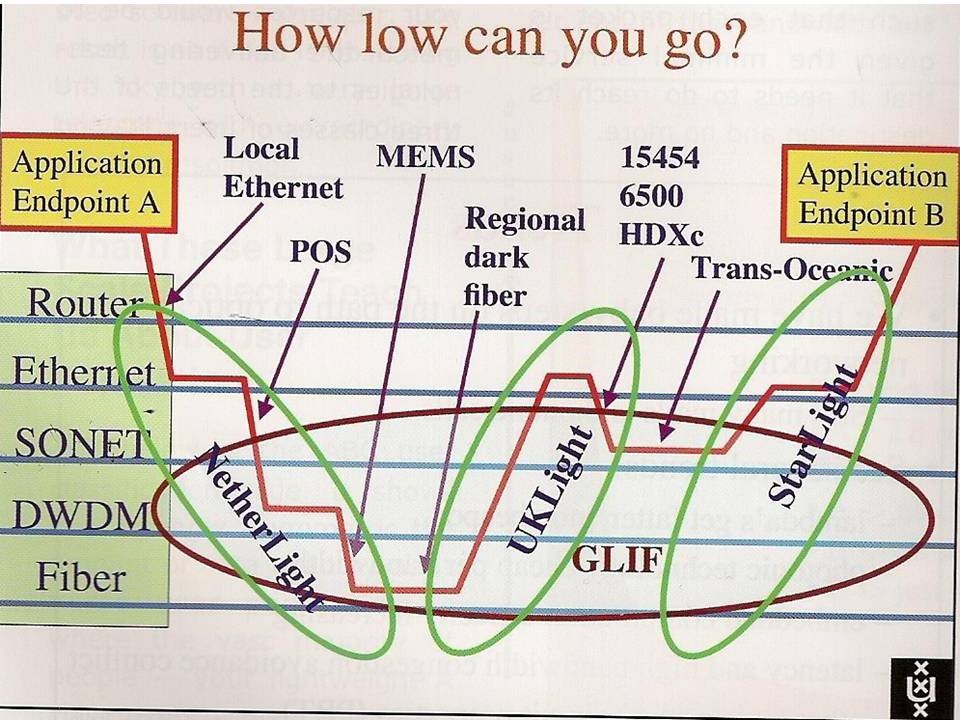
The Dutch, unaffected by the corruption that plagues the US government and its corporate patrons (aptly documented in Matt Tabbi's GRIFTOPIA), have done it right. They have built Roger Karraker's “Highways of the Mind, done so from the bottom-up, and recognized the massive efficiencies that come from a combination of optical paths and clever holistic architectures that allow data to move at lower levels when the fit is right. The Dutch are deep and holistic; the US is superficial and corrupt. That's the story.
Related Commentary:
Crowd-Sourcing Comes of Age on Libya
Advanced Cyber/IO, Analysis, Civil Society, Collective Intelligence, Corruption, Counter-Oppression/Counter-Dictatorship Practices, Ethics, Government, info-graphics/data-visualization, InfoOps (IO), Intelligence (government), IO Sense-Making, Methods & Process, Mobile, Real Time
Volunteers Behind Libya Crisis Map: A True Story
Patrick Meier, iRevolutiion, 8 March 2011
My colleague Clay Shirky called it “Cognitive Surplus” in his recent book. Don Tapscott and Anthony Williams refer to it as “MacroWikinomics” in theirs.
What is cognitive surplus? The trillion hours of free time enjoyed by the world's educated population every year. Don and Tony describe MacroWikinomics as mass distributed collaboration on scales we've never seen before thanks to technology.
We're familiar with deficits and shortages, writes, Clay, but when it comes to surplus social capital, things quickly become unpredictable—especially when this capital scales thanks to the use of social networking platforms and Web 2.0 technologies. But then again, says Clay, “Many of the unexpected uses of communication tools are surprising because our old beliefs about human nature were so lousy.”
Phi Beta Iota: Over bagels and lox yesterday, Doug Rushkoff summarized his intention for ContactCon: “to take us back to 1992, but this time with 2012 technology and human understanding.” Here is what the US Government was told in 1992 about crowd-sourcing. 20 years and 1 trillion dollars later (20 years, average of 50 billion a year), we still have the world's most expensive ineffective wasteland pretending to “do” intelligence. The lunacy continues.
1992 AIJ OSS Steele’s Original Vision
1992 AIJ Fall ‘New Paradigm” and Avoiding Future Failures
Reference: 1992 USMC C4I Campaign Plan
1992 E3i: Ethics, Ecology, Evolution, & intelligence (An Alternative Paradigm)
