The UN Global Pulse report on Big Data for Development ought to be required reading for anyone interested in humanitarian applications of Big Data. The purpose of this post is not to summarize this excellent 50-page document but to relay the most important insights contained therein. In addition, I question the motivation behind the unbalanced commentary on Haiti, which is my only major criticism of this otherwise authoritative report.
Organization of American States (OAS): For the record. At the end of the 42d General Assembly of OAS members in Bolivia, the foreign ministers of Bolivia, Ecuador, Venezuela and Nicaragua announced that their countries had decided to withdraw from the Inter-American of Reciprocal Assistance, better known as the Rio Pact.
In making the announcement, Ecuadorian Foreign Minister Patino said, “Our countries have made the decision to bury what deserves to be buried, to throw into the trash what is no longer useful.”
Article Three states, in pertinent part,”The High Contracting Parties agree that an armed attack by any State against an American State shall be considered as an attack against all the American States and, consequently, each one of the said Contracting Parties undertakes to assist in meeting the attack in the exercise of the inherent right of individual or collective self-defense recognized by Article 51 of the Charter of the United Nations”
Twenty-two American countries variously have ratified the Treaty since 1947, but Cuba withdrew after the revolution and Mexico withdrew in 2004.
Comment: This is primarily a symbolic snub because the Pact is a relic of the Cold War and no surprise because the US Secretary of State did not attend the meeting.
All four withdrawing states have leftist governments and are the members of Venezuelan President Chavez' initiative known as the Bolivarian Alliance for the People of our Americas (ALBA), which is supposed to be a counterweight to the OAS. They appear determined to assert their distance from the US.
Argentina invoked the Rio Pact when it fought the British in the Falklands, but no American state rallied. The US invoked the Pact after the 9/11 attacks in 2001 to enlist the aid of the other American states in the War on Terror. Only four Central American states agreed to participate actively.
Phi Beta Iota: The creation of CELAC — the alternative to the OAS that excludes Canada and the US, has not been covered by the mainstream media. A sustainable revolution is occurring in the South; the US Government will be the last to understand this.
Ever since the beginning of the financial crisis and quantitative easing, the question has been before us: How can the Federal Reserve maintain zero interest rates for banks and negative real interest rates for savers and bond holders when the US government is adding $1.5 trillion to the national debt every year via its budget deficits? Not long ago the Fed announced that it was going to continue this policy for another 2 or 3 years. Indeed, the Fed is locked into the policy. Without the artificially low interest rates, the debt service on the national debt would be so large that it would raise questions about the US Treasury’s credit rating and the viability of the dollar, and the trillions of dollars in Interest Rate Swaps and other derivatives would come unglued.
In other words, financial deregulation leading to Wall Street’s gambles, the US government’s decision to bail out the banks and to keep them afloat, and the Federal Reserve’s zero interest rate policy have put the economic future of the US and its currency in an untenable and dangerous position. It will not be possible to continue to flood the bond markets with $1.5 trillion in new issues each year when the interest rate on the bonds is less than the rate of inflation. Everyone who purchases a Treasury bond is purchasing a depreciating asset. Moreover, the capital risk of investing in Treasuries is very high. The low interest rate means that the price paid for the bond is very high. A rise in interest rates, which must come sooner or later, will collapse the price of the bonds and inflict capital losses on bond holders, both domestic and foreign.
The question is: when is sooner or later? The purpose of this article is to examine that question.
5.0 out of 5 stars End Result of Quarter Century Walk-About,June 5, 2012
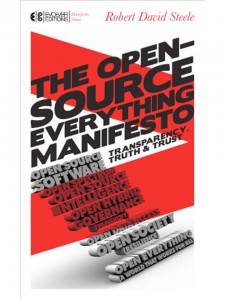
Updated 27 June: Why on earth is this book in top 100 for Espionage? I can only speculate that because I am a former spy, trained over 7,500 intelligence professionals, and have been an arch critic of secret intelligence ever since my 1988 conversion experience, that those who know me or know of my work have tane an interest in the book. They are correct to do so. As the image I have loaded above with the cover, entitled “Intelligence Maturity,” clearly depicts, the craft of intelligence must evolve away from an obsession with spies and secrets and move rapidly through open sources and methods to M4IS2 (Multinational Multiagency Multidisciplinary Multidomain Information-Sharing and Sense-Making). Smart Nations and public intelligence in the public interest are the center of gravity for creating a world that works for all, not spies and secrecy that work more often than not for the 1% instead of the 99%.
Now that Look Inside the Book is up, I have deleted the table of contents and the list of opens I provided early on, and thank all those who went ahead with buying the book (Amazon has the lowest price I know of)—you helped put the book in Top 100 for Democracy most days since the book came out — Top 50 on 17 June. Although fleeting, these rankings are a small sign that the Open Source Everything meme has arrived.
The book evolved from my January 2007 keytone to Chris Prillo's Gnomedex in Seattle, the 64 minute video (and various shorter remixes including one that has gone around Anonymous circles) easily found by searching for < YouTube Steele Gnomedex 2007 > without the brackets. Contact Random House Special Markets to buy the book by the case at whatever discount is the norm for them. I am very eager to receive invitations to talk about this topic, especially in relation to the November 2007 “election” that pits one wing of the two-party tyranny against the other wing, with no difference for We the People.
I have to credit Tom Atlee, Jim Rough, Harrison Owen, Buckminster Fuller, Russell Ackoff, David Weinberger, Lawrence Lessig, Kent Myers, among many others, for the raw material that helped me flip the tortilla–this book is a rejection of tyranny, toxicity, and theft in favor of transparency, truth, and trust. I list a few books below, but point to all 1800+ of my non-fiction rewviews as relevant to the evolution of my thinking since I recognized the pathology of secret intelligence and rule by secrecy.
At Phi Beta Iota the Public Intelligence Blog I have and will continue to post three short excerpts from each chapter (up to Chapter 5 as of this update), and also posted the 33 graphics as color slides, and an interview by Warren Pollock of myself, 11 minutes long. He is a gifted interviewer and video editor, extracted with precision and presented with flair.
This book completes the circle I started walking in 1988.
Robert Steele
ON INTELLIGENCE: Spies and Secrecy in an Open World
My colleague Robert Kirkpatrick from Global Pulse has been actively promoting the concept of “data philanthropy” within the context of development. Data philanthropy involves companies sharing proprietary datasets for social good. I believe we urgently need big (social) data philanthropy for humanitarian response as well. Disaster-affected communities are increasingly the source of big data, which they generate and share via social media platforms like twitter. Processing this data manually, however, is very time consuming and resource intensive. Indeed, large numbers of digital humanitarian volunteers are often needed to monitor and process user-generated content from disaster-affected communities in near real-time.
Meanwhile, companies like Crimson Hexagon, Geofeedia, NetBase, Netvibes, RecordedFuture and Social Flow are defining the cutting edge of automated methods for media monitoring and analysis. So why not set up a Big Data Philanthropy group for humanitarian response in partnership with the Digital Humanitarian Network? Call it Corporate Social Responsibility (CRS) for digital humanitarian response. These companies would benefit from the publicity of supporting such positive and highly visible efforts. They would also receive expert feedback on their tools.
On the next few pages I list a wide range of “opens” within each of the layers illustrated in the Open-Source Pyramid (Figure 1), strictly to illuminate the wide-ranging, near-universal nature of this meme. This is not a complete list! The order below corresponds to Figure 1, where the source information can also be found. [All endnotes removed, generally one per comma de-limited open].
Aspects
Open Access. Generally legal right to view, read, transit.
Participation. Generally open right to contribute or utilize.
Transparency. General visibility of detail to any who wish access.
Report Release: What Internet Security Can Gain From a Public Health Approach
NEW YORK, June 4, 2012 – The Internet puts people, systems, and networks in constant contact worldwide, and it needs a global, coordinated effort to protect digital systems from online threats-just like the public health community's efforts to defend our bodies from illness.
That's the argument of a new report released by a team of experts convened by the New York-based EastWest Institute (EWI) and sponsored by Microsoft Corporation. The report examines how the model of international public health can inform efforts to track and block malware and other malicious actors.
“For years, we have talked about computers being infected by viruses,” said EWI President John Mroz. “With this breakthrough report, we have the opportunity to treat the health of the entire Internet as a shared problem needing cooperative solutions.”