Review: Surrender to Kindness (One Man’s Epic Journey for Love and Peace)

6 Star Top 10%, Asymmetric, Cyber, Hacking, Odd War, Civil Affairs, Civil Society, Complexity & Catastrophe, Complexity & Resilience, Congress (Failure, Reform), Consciousness & Social IQ, Corruption, Crime (Corporate), Crime (Government), Culture, Research, Diplomacy, Economics, Empire, Sorrows, Hubris, Blowback, Executive (Partisan Failure, Reform), Force Structure (Military), History, Information Operations, Insurgency & Revolution, Justice (Failure, Reform), Military & Pentagon Power, Misinformation & Propaganda, Nature, Diet, Memetics, Design, Peace, Poverty, & Middle Class, Philosophy, Politics, Power (Pathologies & Utilization), Priorities, Religion & Politics of Religion, Security (Including Immigration), Stabilization & Reconstruction, Threats (Emerging & Perennial), Truth & Reconciliation, United Nations & NGOs, Values, Ethics, Sustainable Evolution, Voices Lost (Indigenous, Gender, Poor, Marginalized), War & Face of Battle, Water, Energy, Oil, Scarcity
Amazon Page

5.0 out of 5 stars 6 Star and Beyond–Deep Soul-Moving Raw Truths

August 26, 2010

Joseph David Osman

I had the privilege of reviewing this book before it was published. Below is what I provided for use in publicizing the book, followed by my more detailed summary review provided here for the first time.

I have goose-bumps as I contemplate this book that I have just finished in galley form. The author is unique, a mix of Philip Caputo (Rumor of War), Robert Young Pelton (Come Back Alive), and Ralph Peters (Wars of Blood and Faith), with one huge difference–this man, this author, this son of Afghanistan who is red, white, and blue American–has given us the definitive book on all that is wrong with the American “way of war,” at the same time that he so clearly, so explicitly, so very simply, outlines the alternative path of how we can, we must, “wage peace” in Afghanistan. I am reminded by this author of Bonheoffer, of Gandhi, of Nelson Mandela. This is a book in which the souls of two nations come together, both dark and light, and we see in very personal terms, with deep cultural intelligence, that Afghanistan is unconquerable by force, but desperately seeking to connect and respond to kindness. It shames me that our government is so inept–and our population so abjectly disconnected from reality–that we have repeated Viet-Nam. Bagram Air Base is the Binh Hoa Air Base of my time; we once again seek to win hearts and minds while looking and acting like Darth Vader; and our military prisons are again filled with individuals framed by their enemies, imprisoned by gullible naïve uninformed Americans who mean well, but who are simply not trained, equipped, nor organized to wage peace.

Robert David STEELE Vivas
Co-founder USMC Intelligence Center, #1 Amazon Reviewer for Non-Fiction, Author on Intelligence

Highlights for me personally as a former Marine (1976-1996) who lived in Viet-Nam as a pre-teen from 1963-1967:

Continue reading “Review: Surrender to Kindness (One Man's Epic Journey for Love and Peace)”

Review (Preliminary): Atlas of Science–Visualizing What We Know

6 Star Top 10%, Atlases & State of the World, Best Practices in Management, Budget Process & Politics, Change & Innovation, Complexity & Catastrophe, Complexity & Resilience, Culture, Research, Decision-Making & Decision-Support, Economics, Education (Universities), Environment (Problems), Environment (Solutions), Games, Models, & Simulations, History, Information Operations, Information Society, Intelligence (Commercial), Nature, Diet, Memetics, Design, Politics, Power (Pathologies & Utilization), Public Administration, Science & Politics of Science, Secrecy & Politics of Secrecy, Strategy, Survival & Sustainment, Technology (Bio-Mimicry, Clean), Threats (Emerging & Perennial), True Cost & Toxicity, Values, Ethics, Sustainable Evolution, Water, Energy, Oil, Scarcity
Amazon Page (Pre-Order)

Katie Borner

MIT Press to release 31 October 2010

On sale for just under $20–this is a BARGAIN.

Review

“Science is a voyage of discovery and Katy Börner has provided its first atlas. This excellent book offers a compendium of all that is best in explaining visual maps of our scientific knowledge.”
Michael Batty, University College London, author of Cities and Complexity: Understanding Cities with Cellular Automata, Agent-Based Models, and Fractals (MIT Press)

Product Description

Cartographic maps have guided our explorations for centuries, allowing us to navigate the world. Science maps have the potential to guide our search for knowledge in the same way, helping us navigate, understand, and communicate the dynamic and changing structure of science and technology. Allowing us to visualize scientific results, science maps help us make sense of the avalanche of data generated by scientific research today. Atlas of Science, features more than thirty full-page science maps, fifty data charts, a timeline of science-mapping milestones, and 500 color images; it serves as a sumptuous visual index to the evolution of modern science and as an introduction to “the science of science”—charting the trajectory from scientific concept to published results.

Atlas of Science, based on the popular exhibit “Places & Spaces: Mapping Science,” describes and displays successful mapping techniques. The heart of the book is a visual feast: Claudius Ptolemy's Cosmographia World Map from 1482; a guide to a PhD thesis that resembles a subway map; “the structure of science” as revealed in a map of citation relationships in papers published in 2002; a periodic table; a history flow visualization of the Wikipedia article on abortion; a globe showing the worldwide distribution of patents; a forecast of earthquake risk; hands-on science maps for kids; and many more. Each entry includes the story behind the map and biographies of its makers.

Not even the most brilliant minds can keep up with today's deluge of scientific results. Science maps show us the landscape of what we know.

Exhibition (Ongoing) at National Science Foundation, Washington, D.C.; The Institute for Research Information and Quality Assurance, Bonn, Germany; and Storm Hall, San Diego State College

Continue reading “Review (Preliminary): Atlas of Science–Visualizing What We Know”

Review: Searching for Everardo–A Story of Love, War, and the CIA in Guatemala

6 Star Top 10%, Atrocities & Genocide, Biography & Memoirs, Consciousness & Social IQ, Country/Regional, Culture, Research, History, Insurgency & Revolution, Intelligence (Government/Secret), Intelligence (Public), Justice (Failure, Reform), Military & Pentagon Power, Misinformation & Propaganda, Peace, Poverty, & Middle Class, Politics, Secrecy & Politics of Secrecy, Threats (Emerging & Perennial), Voices Lost (Indigenous, Gender, Poor, Marginalized)
Amazon Page

5.0 out of 5 stars 6 Star Epic–Genocide, CIA Complicity, & Indigenous Honor

July 27, 2010

Jennifer K. Harbury

This is one of multiple books by this author, and a huge bargain as a used book–I got the used hardcopy. This book is a book-end to Secret History: The CIA's Classified Account of Its Operations in Guatemala, 1952-1954.

The author wrote Bridge of Courage: Life Stories of the Guatemalan Companeros & Companeras first, and then a book that Amazon lists but does not offer for sale nor does it appear easily when trying to insert the product link: Seeds of Rage: CIA Torture Practices from Vietnam to El Salvador to Abu Ghraib.

See also her Truth, Torture, and the American Way: The History and Consequences of U.S. Involvement in Torture. In selecting this title, I see also GUATEMALA: HUMAN RIGHTS LAWYER JENNIFER HARBURY LOSES SUPREME COURT CASE AS FORMER OFFICIALS CLAIM RIGHT TO LIE.: An article from: NotiCen: Central American & Caribbean Affairs which is depressing–the “right to lie” just astounds me.

As a former case officer (spy) with the CIA, in the Latin American area from 1979 to 1988, and now on my way out of Guatemala, this book is one that I am going to rate as beyond 5 stars, 6 stars and above, because it is a phenomenal vortex that brings together genocide (called “the patriotic wars” by the white minority “conquistadores” seeking to keep the 80% indigenous in slave status), CIA complicity in genocide and torture, and the deep, deep honor and courage and intelligence of the indigenous people. See 1491: New Revelations of the Americas Before Columbus for the larger treatment.

Highlights for me:

Continue reading “Review: Searching for Everardo–A Story of Love, War, and the CIA in Guatemala”

Review: International Peace Observations

5 Star, Civil Affairs, Complexity & Resilience, Country/Regional, Culture, Research, Force Structure (Military), Information Operations, Insurgency & Revolution, Intelligence (Public), Misinformation & Propaganda, Peace, Poverty, & Middle Class, Politics, Power (Pathologies & Utilization), Public Administration, Religion & Politics of Religion, Secrecy & Politics of Secrecy, Security (Including Immigration), Stabilization & Reconstruction, Survival & Sustainment, Threats (Emerging & Perennial), Truth & Reconciliation, United Nations & NGOs, Voices Lost (Indigenous, Gender, Poor, Marginalized), War & Face of Battle

Amazon Page

5.0 out of 5 stars Seminal Work Cited by Dr. Walter Dorn
July 23, 2010
David Wainhouse

EDIT of 6 Sep 2010 to add comments on books once received.

I bought this book, a real bargain, at the suggestion of Dr. Walter Dorn, the “dean” of the peace intelligence scholars, who cites the book with great favor in his own forthcoming book, KEEPING WATCH: Monitoring and Technology in UN Peace Operations, which I am going through now in galley form.

Now that I am holding it in my hands, here are some comments.

1)  Published in 1966, it is a phenomenal, an utterly superb, historical review of League of Nations, Latin American Union, and UN peace observation missions from 1920 to 1965.  The book concludes with a major section on “Strengthening Peace Observations.”

2)  Right away I decide to donate this book to the George Mason University library without marking it up, nor am I reading it, having seen enough to understand why Professor Dorn recommends it so highly as a historical reference work.

3)  The book clearly needs a sequel, from 1966 to date, over 40 years of new conflicts and new peace missions, and I make mention of this hoping that someone reading this review will be inspired to take on the project with many collaborators.

Other related books I have reviewed:
Peacekeeping Intelligence: Emerging Concepts for the Future
Intelligence and the War in Bosnia: 1992-1995 (Perspectives on Intelligence History)
U.S. Commercial Remote Sensing Satellite Industry: An Analysis of Risks
Peacekeeping and Public Information: Caught in the Crossfire (Cass Series on Peacekeeping, 5)
Public Information Campaigns in Peacekeeping : The UN Experience in Haiti

Continue reading “Review: International Peace Observations”

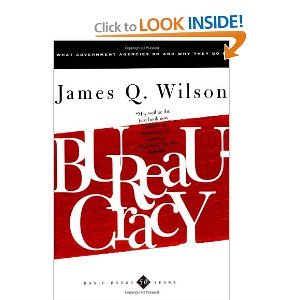
Review (Guest): Bureaucracy–What Government Agencies Do And Why They Do It

5 Star, Budget Process & Politics, Complexity & Catastrophe, Congress (Failure, Reform), Corruption, Crime (Government), Decision-Making & Decision-Support, Democracy, Diplomacy, Economics, Education (General), Empire, Sorrows, Hubris, Blowback, Environment (Problems), Executive (Partisan Failure, Reform), Force Structure (Military), Information Operations, Intelligence (Government/Secret), Justice (Failure, Reform), Leadership, Military & Pentagon Power, Peace, Poverty, & Middle Class, Philosophy, Politics, Power (Pathologies & Utilization), Priorities, Public Administration, Religion & Politics of Religion, Science & Politics of Science, Secrecy & Politics of Secrecy, Security (Including Immigration), Strategy, Survival & Sustainment, True Cost & Toxicity, Values, Ethics, Sustainable Evolution, Water, Energy, Oil, Scarcity
Amazon Page

James Wilson (Author)

43 of 46 people found the following review helpful:
5.0 out of 5 stars Comprehensive Guide To Government Bureaucracy, January 1, 2002
By Tansu Demir (Springfield, IL) – See all my review

This book is really a “comprehensive” (in the literal meaning of the word), clearly written, richly supported by concrete cases (mostly, federal agencies) guide about government bureaucracy mainly in the United States. From introduction to the end, Wilson clearly and convincingly demonstrates the reasons what the government agencies do and why they do that in the way they do.

The book is organized into six parts: Organizations, Operators, Managers, Executives, Context, and Change. In the first part, Wilson's thesis is simply that organization matters. Organization must be in accordance with the objectives of the agency. In the second part, the author examines the operators' behavior (say, street-level bureaucrats) and how their culture is shaped by the imperatives of the situation they encounter in a daily basis. The third part deals with the issues peculiar to managers of public agencies. In this part, attention is focused upon the constraints that put the mangers in a stalemate (see chapter 7, this chapter is completely insightful!!). The fourth part is devoted to the Executives. This part clearly illustrates why the executives of government agencies compete with other departments and which strategies are used in the process of competition and/or cooperation (especially see the 10th chapter about Turf, insightful!!). In the fifth part, Wilson focuses on the context in which public agencies do their business (Congress, Presidents and Courts). In the last part, Wilson summarizes the problems and examines alternative solutions (the market alternatives to the bureaucracy) and concludes with reasonable and “little” propositions.

Continue reading “Review (Guest): Bureaucracy–What Government Agencies Do And Why They Do It”

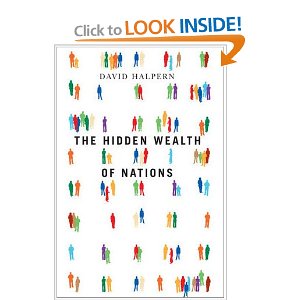
Review: The Hidden Wealth of Nations

6 Star Top 10%, Best Practices in Management, Capitalism (Good & Bad), Change & Innovation, Civil Society, Complexity & Resilience, Consciousness & Social IQ, Democracy, Education (General), Education (Universities), Games, Models, & Simulations, Intelligence (Collective & Quantum), Intelligence (Public), Intelligence (Wealth of Networks), Nature, Diet, Memetics, Design, Peace, Poverty, & Middle Class, Philosophy, Politics, Security (Including Immigration), Survival & Sustainment, Voices Lost (Indigenous, Gender, Poor, Marginalized)
Amazon Page
5.0 out of 5 stars Beyond 5 Stars, a Cornerstone Book, Most Extraordinary Strategic Depth
June 30, 2010

David Halpern

Amazon has recently been allowing longer reviews by inserting a “Read More” line and I hope this entire review is allowed to stand. It will also be posted to Phi Beta Iota the Public Intelligence Blog, with links back to Amazon.

This is a Beyond Five Stars book. Although there is a fine literature emerging on collective intelligence and wealth of networks–and there is an increasingly robust Open Money movement that also includes local communities currencies that keep the wealth local–this book does something no other book has done–it connects economics to humanity and reality and the intangibles in all their forms.

This is not a book about underground economies, barter systems, alternative currencies, etcetera. It is one of the most profoundly relevant, erudite yet easy to read books I have ever read, with a direct bearing on every aspect of human life, and in particular the role of government as it should be.

The author specifically quantifies the financial and intangible value of “getting along” and being part of deep interconnections that define, drive, and develop (or not) the hidden wealth of nations.

The author has provided an extraordinarily well-organized book with a well-presented series of chapters that left me with so many flyleaf notes I fear I will not do the author and the intellectual tour de force he has provided, quite enough justice. Buy and read the book. Tell elected and appointed leaders about it–or send them a copy of this review. [I am stunned that there are no other reviews as this book was published in 2009.]

Continue reading “Review: The Hidden Wealth of Nations”

Review: The Politics of Happiness–What Government Can Learn from the New Research on Well-Being

4 Star, America (Founders, Current Situation), Best Practices in Management, Civil Society, Complexity & Resilience, Consciousness & Social IQ, Culture, Research, Democracy, Disease & Health, Economics, Education (General), Education (Universities), Electoral Reform USA, Environment (Solutions), Future, Intelligence (Public), Peace, Poverty, & Middle Class, Philosophy, Politics, Priorities, Public Administration, Voices Lost (Indigenous, Gender, Poor, Marginalized)
Amazon Page

4.0 out of 5 stars Absolutely Righteous, Mis-Leading Title

June 20, 2010

Derek Bok

First off, I'm back. After three months integrating into a field position with a prominent international organization, with three days off the whole time, I am finally able to get back to reading, and have about fifteen books on water I was going to read for UNESCO but will now read and review for myself. Look for two reviews a week from this point on, absent another tri-fecta (volcano, storm, minor coup).

This book is the first of three books that I am reviewing this week, the other two are The Hidden Wealth of Nations, which will be a five, and Identity Economics: How Our Identities Shape Our Work, Wages, and Well-Being, probably a five as well, but I continue to be stunned as how people limit their references to the last 10 years when so much has been done that is relevant in the last 50.

This book is not about the politics of happiness. It is more about the possibilities of public administration of happiness.

This will be a long review–apart from the author being one of a handful to truly top-notch minds with a historical memory, the topic is important–much more important than I realized until I starting following unconventional economics (ecological economics, true cost, bio-mimicry, sustainable design, human development and non-financial wealth).

The author opens with Bhutan and its Gross National Happiness (GNH) concept, with four pillars (good governance, stable-equitable social development, environmental protection, preservation of culture). Elsewhere (on the web) I learn that the 72 indicators are divided into nine domains (time use, living standards, good governance, psychological wellbeing, community vitality, culture, health, education, and ecology).

From there the author moves to the 1800's and Jeremy Bentham, and of course our own Founding Fathers who included “the pursuit of happiness” in the Declaration of Independence. As I have commented before in reviewing other books such as 1776; What Kind of Nation: Thomas Jefferson, John Marshall, and the Epic Struggle to Create a United States, and The Thirteen American Arguments: Enduring Debates That Define and Inspire Our Country, happiness in those days was interpreted as fulfillment, “be all you can be,” not frivolous joy of “excessive laughter.”

The author identifies and discusses six factors pertinent to happiness in the US context as he defines it: Marriage; Social Relationships; Employment (wherein trust in management is VASTLY more important than the paycheck); Perceived Health; Religion (in sense of community not dogma) and Quality of Government (as which point I am reminded of George Will's superb Statecraft as Soulcraft; Quality of government is further divided into Rule of Law, Efficient Government, Low Violence and Corruption; High Degree of Trust in Public Officials and Especially Police; and Responsive Encounters by Citizens with Government.

Note: 30 million in US population are “not too happy.”

Continue reading “Review: The Politics of Happiness–What Government Can Learn from the New Research on Well-Being”