Owl: Solar Flare, Nuclear Meltdowns, Earth Radiation

Earth Intelligence
0Shares
Who? Who?

Severe Solar Storms Could Disrupt Earth This Decade: NOAA

The National Oceanic and Atmospheric Administration, a federal agency that focuses on the condition of the oceans and atmosphere, said a severe solar storm could cause global disruptions in GPS systems, power grids, satellite communications, and airline communications.

Profound change of the near-Earth radiation environment caused by solar superstorms

SPACE WEATHER, VOL. 9, S08007, 13 PP., 2011
doi:10.1029/2011SW000662

Key Points

  • Very strong storms may produce dramatic intensifications of the inner zone
  • Radial diffusion and local acceleration can explain dynamics during superstorms
  • Potential loss from superstorm may be devastating

Solar flare could unleash nuclear holocaust across planet Earth, forcing hundreds of nuclear power plants into total meltdowns

(NaturalNews) Forget about the 2012 Mayan calendar, comet Elenin or the Rapture. The real threat to human civilization is far more mundane, and it's right in front of our noses. If Fukushima has taught us anything, it's that just one runaway meltdown of fissionable nuclear material can have wide-ranging and potentially devastating consequences for life on Earth. To date, Fukushima has already released 168 times the total radiation released from the Hiroshima nuclear bomb detonated in 1945, and the Fukushima catastrophe is now undeniably the worst nuclear disaster in the history of human civilization.

But what if human civilization faced a far greater threat than a single tsunami destroying a nuclear power facility? What if a global tidal wave could destroy the power generating capacities of all the world's power plants, all at once?

Such a scenario is not merely possible, but factually inevitable. And the global tidal wave threatening all the nuclear power plants of the world isn't made of water but solar emissions.

 

Steve Aftergood: Citizen Scientists Using Mobile Phones

Advanced Cyber/IO, Civil Society, Collective Intelligence, Hacking, InfoOps (IO), Mobile, Policies, Real Time, Threats
0Shares
Steven Aftergood

Using Mobile Phones to Engage Citizen Scientists in Research
E. A. Graham, S. Henderson, and A. Schloss
[Abstract] [PDF]

Mobile phone–based tools have the potential to revolutionize the way citizen scientists are recruited and retained, facilitating a new type of “connected” citizen scientist—one who collects scientifically relevant data as part of his or her daily routine.  Established citizen science programs collect information at local, regional, and continental scales to help answer diverse questions in the geosciences and environmental sciences. Hundreds of thousands of citizen scientists contribute to recurring research projects such as the Audubon Society’s annual Christmas Bird Count, which drew more than 60,000 observers in 2009, or the U.S. Environmental Protection Agency’s Volunteer
Monitoring program, through which trained volunteers improve the monitoring of water quality in lakes and streams across the United States. These programs have relied on traditional recruiting techniques and written observations. New methods for engaging participants through technology, specifically, mobile applications, or apps, provide unprecedented ways for participants to have immediate access to their own and others’ observations and research results.

Phi Beta Iota:  Changes to the Earth that used to take 10,000 years now take three.  Real-time science is no longer a dream, it is a necessity.  Governments and corporations as well as universities appear to be largely out of touch with the possibilities, but we do note that for years Taiwan has been paying a bounty to citizens who capture polluters in the act with a snapshot and GPS location.

WInslow Wheeler: USAF Cost Over-Runs–DoD Micro-Look

03 Economy, 04 Inter-State Conflict, 07 Other Atrocities, 10 Security, 11 Society, Budgets & Funding, Corruption, DoD, Government, IO Deeds of War, Military, Officers Call, Peace Intelligence
0Shares
Winslow Wheeler

When a system is so slosh with money that it does not know what its costs are, it is time to take serious action.  But what do you do when no one cares?

The US Air Force misreports, even to itself (and to Congress and OSD), the cost to operate and support its own aircraft.  That is the bottom line of my recent attempt to uncover operating and support (O&S) costs for aircraft like the F-22 and the B-2.

It also gets more interesting: the official USAF data that are available show that, despite promises to the contrary, “stealth” aircraft are far, far more expensive to operate than the aging (and expensive to maintain) relics they are to replace.  Moreover, the data that are available are very likely an understatement.  Also, there are some other cost Queens in the USAF inventory; still others are hidden in the missing data.

The amounts of money involved are huge.  Generally, O&S costs for aircraft are twice (very probably more) the cost to acquire them.  For example, OSD predicts the $379 billion F-35 program will cost an additional $916 billion to operate and support.  (However, the O&S number is a low-ball prediction.)

What is happening about this?  Nothing.

These are some of the points in a 3,000 word study piece I recently completed.  The piece, with a one page summary, follows below.  It is also at the CDI website at , and you can also see journalists Colin Clark's take.

The text of the short study and its summary follows:

Continue reading “WInslow Wheeler: USAF Cost Over-Runs–DoD Micro-Look”

Chuck Spinney: Middle East New Geopolitical Map

02 Diplomacy, 05 Iran, 08 Wild Cards, 09 Justice, 10 Security, 11 Society, Corruption, Counter-Oppression/Counter-Dictatorship Practices, Government, IO Deeds of War, Peace Intelligence
0Shares
Chuck Spinney

In this very important essay, one of the world's leading authorities on the Middle East explains the tectonic shifts taking place that are clearly leaving the United States and Israel on the wrong side of history.

The Middle East’s New Geopolitical Map

by Patrick Seale

Agence Global, 20 Sep 2011

The Arab Spring is not the only revolution in town. The toppling of dictators in Tunisia, Egypt and Libya; the mounting death toll in Syria and Yemen, where the outcome is still undecided; the revival of long-suppressed Islamic movements demanding a share of power; the struggle by young revolutionaries to re-invent the Arab state — all these dramatic developments have distracted attention from another revolution of equal significance.

It is the challenge being mounted by the region’s heavyweights — Turkey, Saudi Arabia, Egypt and Iran — against the hegemony which the United States and Israel have sought to exercise over them for more than half a century.

. . . . . . .

America’s most grievous mistake, however — the source of great harm to itself, to Israel, and to peace and stability in the Middle East — has been to tolerate Israel’s continued occupation and dispossession of the Palestinians. These policies have aroused intense hate of Israel in the Arab and Muslim world and great anger at its superpower protector.

We are now witnessing a rebellion against these policies by the region’s heavyweights — in effect a rebellion against American and Israeli hegemony as spectacular as the Arab Spring itself. The message these regional powers are conveying is that the Palestine question can no longer be neglected. Israel’s land grab on the West Bank and its siege of Gaza must be ended. The Palestinians must at last be given a chance to create their own state. Their plight weighs heavily on the conscience of the world.

. . . . . . .

Turkey, Iran and Egypt, heirs to ancient civilizations, are thus asserting themselves against what they see as an Israeli upstart. Saudi Arabia, the region’s oil and financial giant, guardian of Islam’s holiest sites, is breaking free from the constraints of the American alliance.

Israel stands accused. Will it heed the message or shoot the messenger? If true to its past form, it might well try to fight its way out of the box in which it now finds itself, further destabilising the region and attracting to itself further opprobrium.

Read full article.

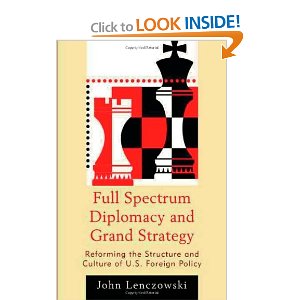
Review: Full Spectrum Diplomacy and Grand Strategy – Reforming the Structure and Culture of U.S. Foreign Policy

5 Star, Asymmetric, Cyber, Hacking, Odd War, Best Practices in Management, Change & Innovation, Civil Society, Complexity & Resilience, Democracy, Diplomacy, Humanitarian Assistance, Information Operations, Insurgency & Revolution, Intelligence (Public), Leadership, Peace, Poverty, & Middle Class, Philosophy, Politics, Priorities, Public Administration, Religion & Politics of Religion, Science & Politics of Science, Stabilization & Reconstruction, Strategy, Survival & Sustainment, Threats (Emerging & Perennial), Values, Ethics, Sustainable Evolution, Voices Lost (Indigenous, Gender, Poor, Marginalized), War & Face of Battle
0Shares
Amazon Page

John Lenczowski

5.0 out of 5 stars Long Needed Treatise, But Too Expensive,September 21, 2011

EDIT of 11 December 2011: Gene Poteat, President of the Association of Former Intelligence Officers (AFIO) has an excellent review of this book in the Summer/Fall 2011 issue of Intelligencer. The following quote is from his review, it captures the essence with perfection:

“The weakness and deteriorating standing of America in the world today is the failure to take into account the role of information, disinformation, ideas, values, culture, and religion plays in the influence and conduct of foreign and national security policy.”

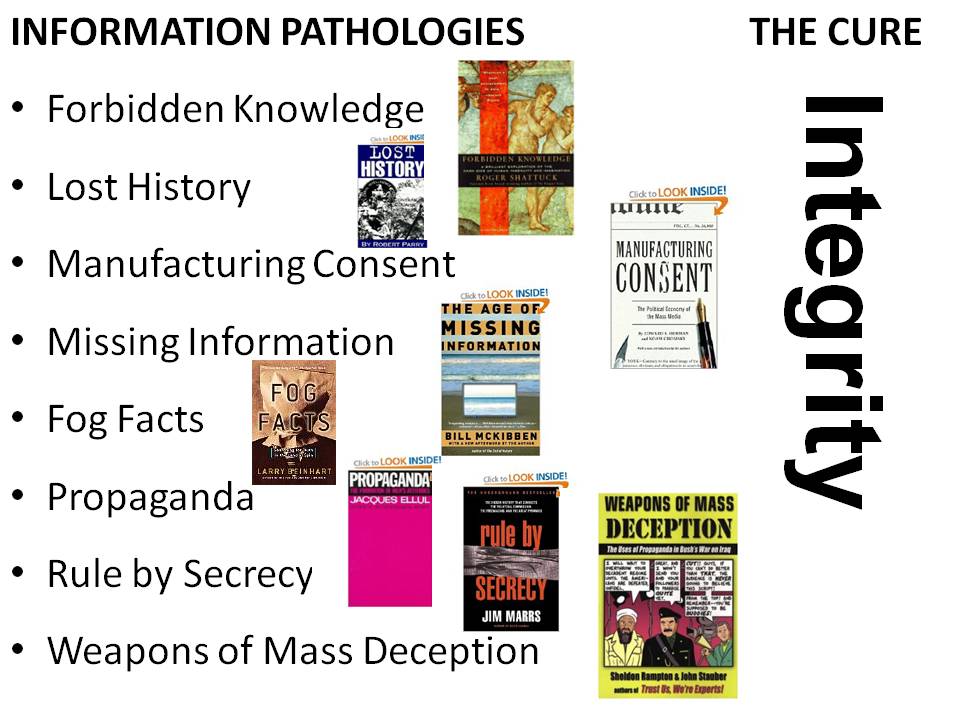
While the above glosses over the corporate capture and abject corruption of all three branches of the Federal government, it certainly summarizes and recommends the book in question. See also my graphic, “Information Pathologies,” loaded above next to cover.

End Edit

In the midst of an economic depression, it is a real shame to see a book that is so very relevant to unscrewing the Republic, and also see the same book terribly over-priced. At 230 pages this book should be offered at 24.95, and a donor should be found to permit the author to speak to the Department of State via the Secretary's Open Forum, with a free copy of the book to every person attending.

Click on Image to Enlarge

The author is the founder of the Institute of World Politics, a rather unique institution that offers three Masters programs and that strives to do what no other university can claim: to teach a mastery of all of the instruments of national power, and to teach how culture, ethics, strategy, and philosophy can come together to drive Whole of Government planning, programming, budgeting, and execution so as to advance both the prosperity and the protection of the Republic.

This book came to my attention after I found and truly enjoyed another book out of the Institute of World Policy, by Cultural Intelligence for Winning the Peace by Juliana Geran Pilon. Everything I read about the Institute, or by those associated with it, offers a very strong, coherent, culturally-compelling vision of how to advance positive values inherent in the Declaration of Independence and the Constitution of the United States of America.

Continue reading “Review: Full Spectrum Diplomacy and Grand Strategy – Reforming the Structure and Culture of U.S. Foreign Policy”

DefDog: US Surveillance Law Goes to Supreme Court

07 Other Atrocities, Civil Society, DHS, Director of National Intelligence et al (IC), Ethics, Government, IO Technologies, Law Enforcement
0Shares
DefDog

Court allows challenge of U.S. surveillance law

By

Washington Post, 21 September 2011

A group of plaintiffs hoping to mount a challenge to U.S. surveillance law secured a major victory Wednesday when a federal appeals court upheld their standing to sue the government.

The Second Circuit Court of Appeals’ 6-6 decision allows a group of American lawyers, human rights activists and journalists to challenge the constitutionality of the Foreign Intelligence Surveillance Act as amended by Congress in 2008.

The revision expanded the government’s surveillance authority, permitting intelligence agencies to collect information on U.S. soil without a warrant identifying a particular individual — as long as the government could assure a surveillance court that its targeting procedures are designed to find people who are not U.S. persons and who are overseas.

U.S. government has typically attempted to block such challenges by arguing that litigation would reveal state secrets or that the plaintiffs lack standing to sue. But in March, a three-judge panel accepted the argument of the plaintiffs, represented by the American Civil Liberties Union, that the law had harmed them by forcing them to take draconian measures to avoid government interception of their phone calls and e-mails to overseas clients.

In other words, the plaintiffs in the case, Amnesty International v. Clapper, had standing.

Continue reading “DefDog: US Surveillance Law Goes to Supreme Court”

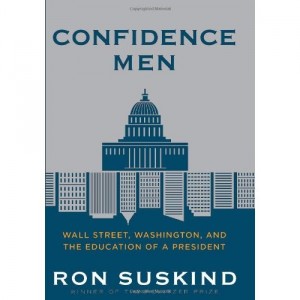
Review (Guest): Confidence Men – Wall Street, Washington, and the Education of a President

5 Star, America (Founders, Current Situation), Banks, Fed, Money, & Concentrated Wealth, Capitalism (Good & Bad), Complexity & Catastrophe, Congress (Failure, Reform), Corruption, Crime (Corporate), Crime (Government), Crime (Organized, Transnational), Culture, Research, Economics, Executive (Partisan Failure, Reform), Justice (Failure, Reform), Leadership, Peace, Poverty, & Middle Class, Politics, Power (Pathologies & Utilization), Public Administration, Secrecy & Politics of Secrecy, True Cost & Toxicity, Values, Ethics, Sustainable Evolution, Voices Lost (Indigenous, Gender, Poor, Marginalized)
0Shares
Amazon Page

Ron Suskind

From Product Description:

The new president surrounded himself with a team of seasoned players—like Rahm Emanuel, Larry Summers, and Tim Geithner—who had served a different president in a different time. As the nation’s crises deepened, Obama’s deputies often ignored the president’s decisions—“to protect him from himself”—while they fought to seize control of a rudderless White House. Bitter disputes—between men and women, policy and politics—ruled the day. The result was an administration that found itself overtaken by events as, year to year, Obama struggled to grow into the world’s toughest job and, in desperation, take control of his own administration.

5.0 out of 5 stars Objective Look at Presidential Leadership,September 20, 2011

Suskind's “Confidence Men” is based on 746 hours of interviews with over 200 people, including former and current members of the Obama administration – including the president. It's negative observations will not make the president's life any easier – already dealing with an emboldened, growing opposition, a floundering economy, the appearance of having been outmaneuvered during the debt-ceiling debacle, the Solyndra mess, another Palestine-Israel mess, and even prominent strategists already saying he should ‘fire much of his staff.' It begins with candidate Obama's crash course in economics and ends in early 2011, and does not include the efforts to kill Osama bin Laden, the more recent debt ceiling fight, nor his most recent efforts to create jobs.

The most attention-getting material involves comments from Obama's economic team. For example, Lawrence Summers is quoted as saying to Budget Director Peter Orzag at a dinner that ‘There's no adult in charge. Clinton would never have made these mistakes.' Former Federal Reserve chairman Paul Volcker, in turn, describes the president as too reliant on Summers, smart, but not smart enough. Senior White House aide Pete Rouse wrote ‘There is deep dissatisfaction within the economic team with what is perceived as Larry's imperious and heavy-handed direction of the economic policy process.' Suskind also tells us Geithner was working behind the scenes to neutralize Elizabeth Warren and prevent her being named to leadd the new Consumer Financial Protection Bureau – per bankers' demands. And then there's Christina Romer, former chair of the Council of Economic Advisers, stating that she ‘felt like a piece of meat' after being kept out of a meeting by Summers; further, she once threatened to walk out of a dinner with the president and outside economists after the president skipped over her when asking his guests for their recommendations.

Continue reading “Review (Guest): Confidence Men – Wall Street, Washington, and the Education of a President”