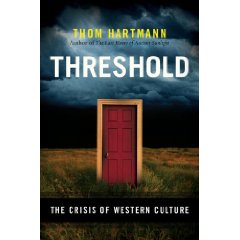
Review: Threshold–The Crisis of Western Culture

5 Star, America (Founders, Current Situation), Banks, Fed, Money, & Concentrated Wealth, Capitalism (Good & Bad), Censorship & Denial of Access, Complexity & Catastrophe, Congress (Failure, Reform), Consciousness & Social IQ, Culture, Research, Democracy, Economics, Education (General), Electoral Reform USA, Empire, Sorrows, Hubris, Blowback, Environment (Problems), Executive (Partisan Failure, Reform), Military & Pentagon Power, Misinformation & Propaganda, Nature, Diet, Memetics, Design, Politics, Power (Pathologies & Utilization), Religion & Politics of Religion, Secrecy & Politics of Secrecy, Technology (Bio-Mimicry, Clean), True Cost & Toxicity, Values, Ethics, Sustainable Evolution, Voices Lost (Indigenous, Gender, Poor, Marginalized), Water, Energy, Oil, Scarcity
Amazon Page
Amazon Page

5.0 out of 5 stars Five for the Voice, Four for the Substance

December 12, 2009
Thom Hartmann
Thom Hartmann is one of a handful of individuals that I consider to be true guides for the rest of us, and I consider two of his earlier books, Cracking the Code and SCREWED, to have been instrumental in my own transformation from recovering spy to intelligence officer to the public.

The book does cover a lot of ground lightly, but it is coherent, and because it is Thom Hartmann, whose voice is hugely important to all of us, I settle on a five instead of a four. Other books that complement this one include Tom Atlee's The Tao of Democracy: Using Co-Intelligence to Create a World That Works for All, Jim Rough's Society's Breakthrough!: Releasing Essential Wisdom and Virtue in All the People, and The People's Business: Controlling Corporations and Restoring Democracy.

Here are my notes:

+ Book may be missing pages, mine starts at page xi (Preface) so I am left wondering, what happened to i through x?

+ Book opens with quotes from Einstein and Schweitzer with respect to the urgency of widening our circle of compassion to include ALL living things, and explicitly ALL humanity.

Continue reading “Review: Threshold–The Crisis of Western Culture”

Review: The End of America–Letter of Warning to a Young Patriot

5 Star, America (Founders, Current Situation), Atrocities & Genocide, Censorship & Denial of Access, Congress (Failure, Reform), Consciousness & Social IQ, Corruption, Country/Regional, Crime (Government), Culture, Research, Executive (Partisan Failure, Reform), Impeachment & Treason, Intelligence (Government/Secret), Justice (Failure, Reform), Peace, Poverty, & Middle Class, Philosophy, Politics, Power (Pathologies & Utilization), Security (Including Immigration), Terrorism & Jihad, Threats (Emerging & Perennial), True Cost & Toxicity, Truth & Reconciliation, Values, Ethics, Sustainable Evolution, Voices Lost (Indigenous, Gender, Poor, Marginalized)
Amazon Page
Amazon Page
5.0 out of 5 stars Needs to Be Said, Needs to Be Read, A Solid First Step
December 10, 2009
Naomi Wolf
I disagree with those that criticize this book. This is PRECISELY the kind of book we need to see, at a reasonable price, being discussed in schools, clubs, and churches.

QUOTE page 27: “The Founders set out to prove that ordinary people could be entrusted with governing themselves in a state where no one could arbitrarily arrest them, lock them up, or torture them.”

This book resonates with me, in part because for the past ten years I have been reading heavily and observing the decline of America in all respects–see my chapter on Paradigms of Failure in Election 2008: Lipstick on the Pig (Substance of Governance; Legitimate Grievances; Candidates on the Issues; Balanced Budget 101; Call to Arms: Fund We Not Them; Annotated Bibliography), both free at Phi Beta Iota the Public Intelligence Blog (as will all my books, but I do recommend the Amazon hard copies).

Continue reading “Review: The End of America–Letter of Warning to a Young Patriot”

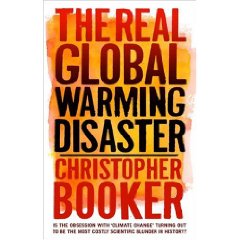
Review: The Real Global Warming Disaster

6 Star Top 10%, Associations & Foundations, Banks, Fed, Money, & Concentrated Wealth, Budget Process & Politics, Capitalism (Good & Bad), Complexity & Catastrophe, Congress (Failure, Reform), Corruption, Crime (Corporate), Crime (Government), Economics, Education (General), Education (Universities), Environment (Problems), Executive (Partisan Failure, Reform), Future, Games, Models, & Simulations, History, Information Operations, Information Society, Information Technology, Intelligence (Commercial), Intelligence (Public), Media, Peace, Poverty, & Middle Class, Power (Pathologies & Utilization), Priorities, Public Administration, Science & Politics of Science, Secrecy & Politics of Secrecy, Threats (Emerging & Perennial), True Cost & Toxicity, United Nations & NGOs, Values, Ethics, Sustainable Evolution, Voices Lost (Indigenous, Gender, Poor, Marginalized), Water, Energy, Oil, Scarcity
Amazon Page
Amazon Page
5.0 out of 5 stars Beyond 6 Stars–Could Help Destroy Strong, Gore, & IPCC
December 4, 2009
This is a preliminary review as there are no others. I will spend the week-end creating a timeline, sorting out the good guys and the bad guys, and charting the costs real and projected.

Short version: bad science, bad media, bad politics, bad finance.

Two other books I have reviewed that support this one:
The Resilient Earth: Science, Global Warming and the Fate of Humanity
Global Warming False Alarm: The Bad Science Behind the United Nations' Assertion that Man-made CO2 Causes Global Warming

This book also helps reinstate Lomborg, whom I am ashamed to say I doubted after he was first denounced (publicly) and then redeemed (quietly) in Denmark. See my reviews of:
The Skeptical Environmentalist: Measuring the Real State of the World
Cool It: The Skeptical Environmentalist's Guide to Global Warming (Vintage)

I list these–and point to others at the end of this preliminary review–to make the point that this author's stellar and very complete work with very good notes is the coup de grace–the final bullet in the head of the IPCC, a mercy killing long over-due. [Disclosure: I funded the first three years of the Earth Intelligence Network, a 501c3 Public Charity that accepts the ten high-level threats to humanity for action, and places climate change within priority #3, Environmental Degradation–we also place a very high priority on clarity, diversity, integrity, and sustainability of effort.

Continue reading “Review: The Real Global Warming Disaster”

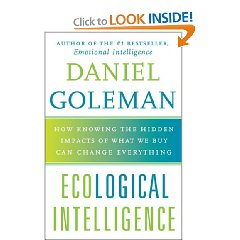
Review: Ecological Intelligence–How Knowing the Hidden Impacts of What We Buy Can Change Everything (Hardcover)

5 Star, Best Practices in Management, Capitalism (Good & Bad), Change & Innovation, Complexity & Resilience, Consciousness & Social IQ, Culture, Research, Economics, Education (General), Environment (Solutions), Information Operations, Information Society, Intelligence (Collective & Quantum), Intelligence (Commercial), Intelligence (Public), Nature, Diet, Memetics, Design, Peace, Poverty, & Middle Class, Survival & Sustainment, True Cost & Toxicity, Values, Ethics, Sustainable Evolution
Amazon Page
Amazon Page

5.0 out of 5 stars From 4 to Five for Gifted Story and Amazon Price Cut

November 29, 2009
Daniel Goleman
I chose this book over Ecological Intelligence: Rediscovering Ourselves in Nature and seeing the author's note about this other book “by a physician, Jungian analyst, and poet” am certain I made the right choice.

The author's “big idea” is called “Radical Transparency,” what the rest of us have been calling “Open Books for decades. I like it, and in the context of his elegant story-telling, I buy in. This book also goes to a five because it is an Information Operations (IO) books, ably focused on data, information, and information-sharing as well as collective sense-making. He author anticipates most of us becoming “active agents” for change, armed with information as Thomas Jefferson understood so well.

CORE NUGGET: Life Cycle Assessment (LCA) is not done for most things, but when done right, it is mainly data and it tracks impacts on human health, ecosystems, climate change, and resource draw-down, for every single component and every single process including transport, packaging, etcetera. Toward the end of the book when the author talks about how an LCA commons is emerging, and quotes Andy Ruben of normally ultra-evil Wal-Mart as saying that LCA innovation “is the largest strategic opportunity companies will see for the next fifty years,” I am seriously impressed.

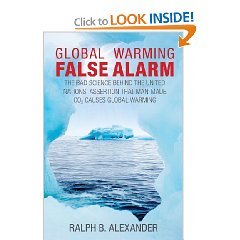
Review: Global Warming False Alarm–The Bad Science Behind the United Nations’ Assertion that Man-made CO2 Causes Global Warming

5 Star, Communications, Corruption, Crime (Government), Economics, Environment (Problems), Environment (Solutions), Games, Models, & Simulations, Information Operations, Intelligence (Government/Secret), Intelligence (Public), Media, Misinformation & Propaganda, Peace, Poverty, & Middle Class, Politics, Power (Pathologies & Utilization), Priorities, Science & Politics of Science, Secrecy & Politics of Secrecy, Survival & Sustainment, Threats (Emerging & Perennial), True Cost & Toxicity, United Nations & NGOs, Values, Ethics, Sustainable Evolution, Voices Lost (Indigenous, Gender, Poor, Marginalized)
Amazon Page
Amazon Page

5.0 out of 5 stars Righteous Good SLAM of IPCC Fraud & Intimidation

November 26, 2009
Ralph B. Alexander
I read a lot, and I confess to have been among those who “bought in” to the celebrity alarmism of Al Gore, but I never displaced the totality of the threats to Earth for an obsessive focus on carbon emissions. Among the three books I have always recommended that are far more balanced than anything by the International Panel on Climate Change (IPCC) are:

High Noon 20 Global Problems, 20 Years to Solve Them
The Future of Life
Plan B 3.0: Mobilizing to Save Civilization (Substantially Revised)

That having been said, I was generally supportive of the Kyoto Treaty and the concept of carbon reductions.

Then I read The Resilient Earth: Science, Global Warming and the Fate of Humanity and within weeks, read Cool It: The Skeptical Environmentalist's Guide to Global Warming (Vintage) and finally, just the past week, noticed the Hacktivism that outed all of the fraud and deception in the Climate Research Unit central to the IPCC (Climate Change Fraud is now a global meme).

Continue reading “Review: Global Warming False Alarm–The Bad Science Behind the United Nations' Assertion that Man-made CO2 Causes Global Warming”

Review: The Design of Business–Why Design Thinking is the Next Competitive Advantage

6 Star Top 10%, Best Practices in Management, Capitalism (Good & Bad), Change & Innovation, Complexity & Resilience, Culture, Research, Economics, Education (Universities), Environment (Solutions), Future, Intelligence (Commercial), Intelligence (Government/Secret), Intelligence (Public), Nature, Diet, Memetics, Design, Philosophy, Public Administration, Strategy, True Cost & Toxicity, Values, Ethics, Sustainable Evolution
Amazon Page
Amazon Page
5.0 out of 5 stars In Its Niche Beyond a Six–In Larger Context a Four
October 11, 2009
Roger Martin
First off, what got me to buy this book does not appear in the book at all–the author on record as saying that Wall Street was not designed to make money for its investors, only for its mandarins–the same is true of how universities are designed, businesses, etc. but that one observation really got my attention. I bought the book before BusinessWeek featured it as one of four in the October 5th edition (Europe version), and after looking the others over, chose this one.
In the larger context of changes to the Earth that now take three years instead of ten thousand years, as an entire literature flourishes on The Philosophy of Sustainable Design, Green to Gold: How Smart Companies Use Environmental Strategy to Innovate, Create Value, and Build Competitive Advantage and Natural Capitalism: Creating the Next Industrial Revolution, the book is a four for narrow-casting and lack of context, but you can use Phi Beta Iota, the Public Intelligence Blog, to search and sort among my other 1,400 reviews, so no penalty is warranted, This book will be scored Beyond 6 Stars at PBI/PIB for the simple reason that it addresses the core need of all eight tribes of intelligence (academia, civil society, commerce, government, law enforcement, media, military, and non-governmental organizations), to re-design away from the Industrial Era waste (where Six Sigma stops), and to instead envision how the world could and should be, and set out to achieve that–a prosperous world at peace.

Review: GIS for Decision Support and Public Policy Making

5 Star, Best Practices in Management, Change & Innovation, Complexity & Resilience, Decision-Making & Decision-Support, Disaster Relief, Games, Models, & Simulations, Geography & Mapping, Geospatial, History, Humanitarian Assistance, Information Operations, Information Society, Information Technology, Intelligence (Government/Secret), Intelligence (Public), Peace, Poverty, & Middle Class, Stabilization & Reconstruction, Strategy, True Cost & Toxicity, Truth & Reconciliation, Values, Ethics, Sustainable Evolution, Voices Lost (Indigenous, Gender, Poor, Marginalized), War & Face of Battle, Water, Energy, Oil, Scarcity

Amazon Page
Amazon Page

ESRI Sales Material, Excellent Price, Recommended,

July 20, 2009
Christopher Thomas and Nancy Humenik-Sappington
As a publisher who is also an author, I continue to be outraged by the prices being charged for “trade” publications. This book is properly-priced–other books on GIS I would have bought are priced at three to four times their actual value, thus preventing the circulation of that knowledge. Those publishers that abuse authors and readers refuse to respect the reality that affordably priced books are essential to the dissemination of knowledge and the perpetuation of the publishing industry.

The book loses one star for refusing to address Google Earth and elements of the Google offering in this industry space. While Google is predatory and now under investigation by the anti-trust division of the Department of Justice, to ignore Google and its implications for cloud management of data in geospatial, time, and other cross- cutting contests, is the equivalent of poking one eye out to avoid seeing an approaching threat.

Having said that, I found this book from ESRI charming, useful, and I recommend it very highly, not least because it is properly priced and very well presented. Potential clients of ESRI can no doubt get bulk deliver of this volume for free.

Return on Investment factors that ESRI highlights up front include:
+ Cost and times savings
+ Increased efficiency, accuracy, productivity of existing resources
+ Revenue generation
+ Enhanced communications and collaboration
+ Automated workflows
+ More efficient allocation of new resources
+ Improved access to information.

The book consists of very easy-to-read and very well-illustrated small case studies, most previously published in Government Matters, which appears to be a journal (there are a number listed by that title).

Here are the highlights of this book for me personally:

+ Allows for PUBLIC visualization of complex data
+ Framework for “seeing” historical data and trends
+ Value of map-based dialog [rather than myth-based assertions]
+ Allows for the visualization of competing perspectives past and future
+ Illuminated land population dynamics, I especially like being able to see “per capita” calculations in visual form, especially when per capita can also be sliced by age, sex, income, religion, race, and so on.
+ Mapping derelict vessels underwater is not just a safety function, but opens the way for volunteer salvage and demolition
+ GROWS organically by attracting new data contributors who can “see” the added value of contributing their data and then being able to see their data and everyone else's data in geospatial terms. This is a POWERFUL incentive for information-sharing, which more often than not receives lip service. GIS for me is the “key” to realizing sharing across all boundaries while also protecting individual privacy
+ Shows “pockets” of need by leveraging data gaps in relation to known addresses (e.g. immunizations, beyond 5 minute fire response, etc.)'
+ Gives real meaning to “Intelligence Preparation of the Battlefield (IPB)” and–not in this book–offers enormous potential if combined with a RapidSMS web database that can received text messages from hundreds of thousands of individuals across a region
+ Eliminates the time-energy cost of data collection in hard copy and processing of the individual pages into an aggregate database.

The book discusses GIS utility in the routing of hazardous materials, but avoids the more explosive (pun intended) value of GIS in showing the public as well as government officials where all the HAZMAT is complacently stored now. For a solid sense of the awaiting catastrophe, see my review of The Next Catastrophe: Reducing Our Vulnerabilities to Natural, Industrial, and Terrorist Disasters.

The book also avoids any discussion of the urgency as well as the value of GIS in tracking and reducing natural resource consumption (e.g. water usage visible to all house by house), and the enormous importance of rapidly making it possible for any and all organizations to channel their data into shared GIS-based aggregations. For a sense of World Brain as EarthGame, see my chapter in Collective Intelligence: Creating a Prosperous World at Peace the chapter is also free online at the OSS.Net, Inc. website forward slash CIB.

This book, 189 pages of full color, is a righteous useful offering. I would encourage ESRI to become the GIS publisher of choice, buy out the titles that I could not afford, and enter the business of affordable aggregate publishing in the GIS field. Other titles by ESRI on GIS:
Measuring Up: The Business Case for GIS
The GIS Guide for Local Government Officials
Zeroing in: Geographic Information Systems at Work in the Community

Five other cool books on data pathologies that GIS can help resolve:
The Landscape of History: How Historians Map the Past
Fog Facts : Searching for Truth in the Land of Spin (Nation Books)
Lost History: Contras, Cocaine, the Press & ‘Project Truth'
Forbidden Knowledge: From Prometheus to Pornography
The Age of Missing Information (Plume)

The latter remind me that GIS will not blossom fully until it can help the humanities deal with emotions, feelings, and perceptions across tribal and cultural boundaries. Right now, 23 years after I first worked with GIS in the Office of Information Technology at CIA, GIS is ready for the intermediate leap forward: helping multinational multiagency data sets come together. ESRI has earned deep regard from me with this book and I will approach them about a new book aimed at the UN, NGOs, corporations, and governments that wish to harmonize data and in so doing, harmonize how they spend across any given region, e.g. Africa. This will be the “master leap” for GIS, enabling the one billion rich to respond to micro-needs from the five billion poor, while also increasing the impact of aggregated orchestrated giving by an order of magnitude.

ESRI: well done!

Vote on Review
Vote on Review

Click Here to Vote on Review at Amazon,

on Cover Above to Buy or Read Other Reviews,

I Respond to Comments Here or There

noble gold